

|
Getting your Trinity Audio player ready...
|
A Tale of One Governor and 4,500 Brooms.
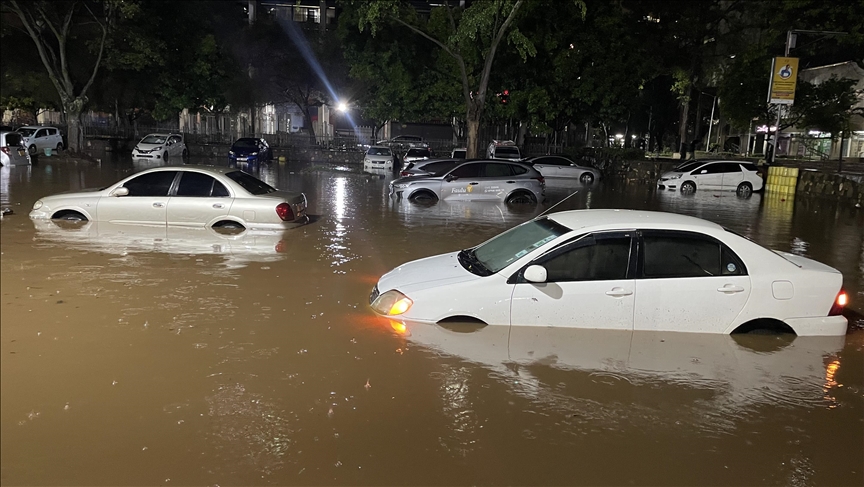
In a city where navigating flooded streets increasingly resembles an improvised Olympic sport, the debate over Nairobi’s perennial drainage crisis has once again resurfaced.
Governor Johnson Sakaja recently offered his perspective during a interview on local tv station, presenting a narrative that blends personal recollection, civic responsibility, and the daunting challenge of urban governance.
At the heart of his argument lies a striking observation: Nairobi’s drainage woes are not a recent phenomenon but a long standing urban dilemma dating back decades.
The Nostalgia of the Marooned
Reflecting on his childhood, the Governor recalled being stranded at school during the devastating 1997 El Niño floods, when heavy rains crippled transport and submerged large sections of the city.
His recollection, intended as a reminder of how deep rooted the problem is, also raises a lingering question in political circles: if the drainage crisis was already evident nearly three decades ago, why does the capital still grapple with the same scenes of submerged roads and stranded commuters?
For critics and observers alike, the anecdote underscores the cyclical nature of Nairobi’s infrastructure failures where each generation of leadership inherits the same problem, often with limited structural reform.
The Riparian Land Paradox
Governor Sakaja also addressed what he described as a fundamental contradiction in the city’s public discourse. On one hand, residents demand swift action whenever floods invade homes and businesses.
On the other, attempts by authorities to clear illegal structures built along riparian reserves frequently trigger public resistance and political backlash.
Nairobi cannot effectively manage stormwater if natural drainage corridors remain obstructed.
Yet demolitions, however necessary from a planning perspective, often ignite social and legal battles.
Urban planners argue that the city’s rapid expansion much of it informal has squeezed rivers, streams, and drainage channels into narrow, obstructed corridors, making seasonal flooding almost inevitable.
Perhaps the most vivid image from the Governor’s remarks was his reference to the county’s “Green Army,” a workforce of approximately 4,500 personnel deployed daily to clear clogged drainage systems.
Remove the debris choking the city’s stormwater channels.
But the Governor paired this statistic with a rhetorical question that shifted part of the responsibility to the public: who exactly is filling those drains?
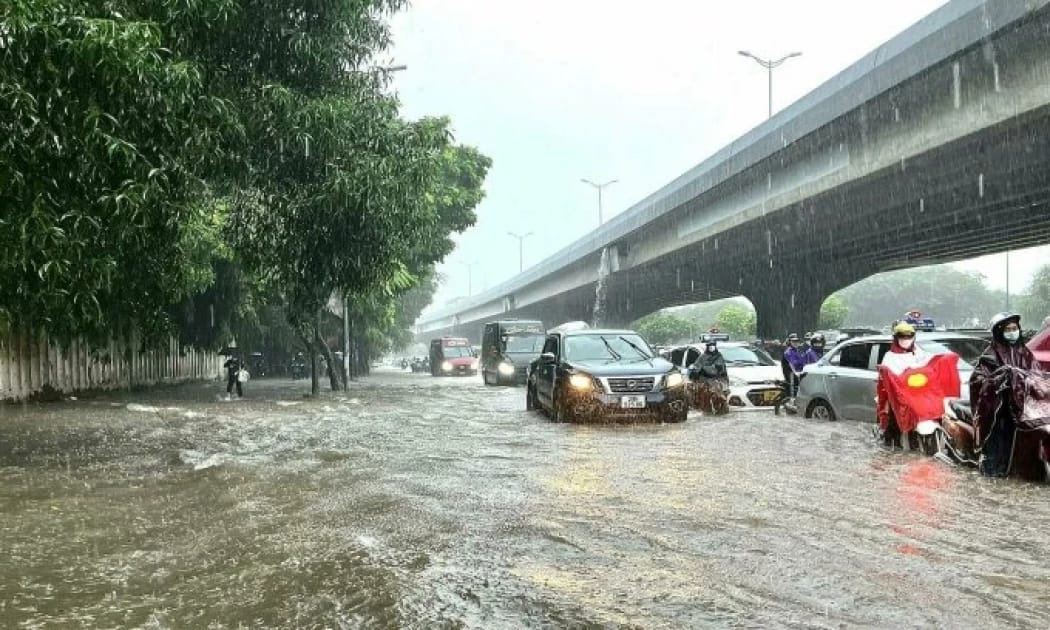
The contrast is stark. On one side stands a county administration mobilizing thousands of workers armed with brooms, shovels, and trucks.
On the other is a population whose everyday waste disposal habits frequently turn drainage systems into dumping grounds for plastic bottles, bags, and food packaging.
In this silent contest between civic order and civic negligence, the plastic bottle often proves the more persistent adversary.
In his concluding remarks, Governor Sakaja framed Nairobi’s floods not merely as an infrastructural problem but as an inherited crisis one passed from one generation of leaders and citizens to the next.
His challenge to both government and residents was clear: the current generation must decide whether it will finally resolve the drainage dilemma or simply document it for posterity.
For now, Nairobi remains caught between rainfall and reform.
And as the city braces for future storms, the defining question persists: will the capital finally repair its pipes and restore its waterways, or will future generations continue recounting the same flood stories just as their parents did decades before?