

|
Getting your Trinity Audio player ready...
|
On November 25, 2000, the United Nations climate summit in the Netherlands collapsed, due to disagreements over implementing the Kyoto Protocol and achieving a 5 percent reduction in greenhouse gas emissions from 1990 levels by 2010. Sharp divisions emerged between the United States, the European Union, and developing nations among the 180 countries represented, exposing the self-serving priorities of imperialist nation-states and the capitalist system in confronting climate change.
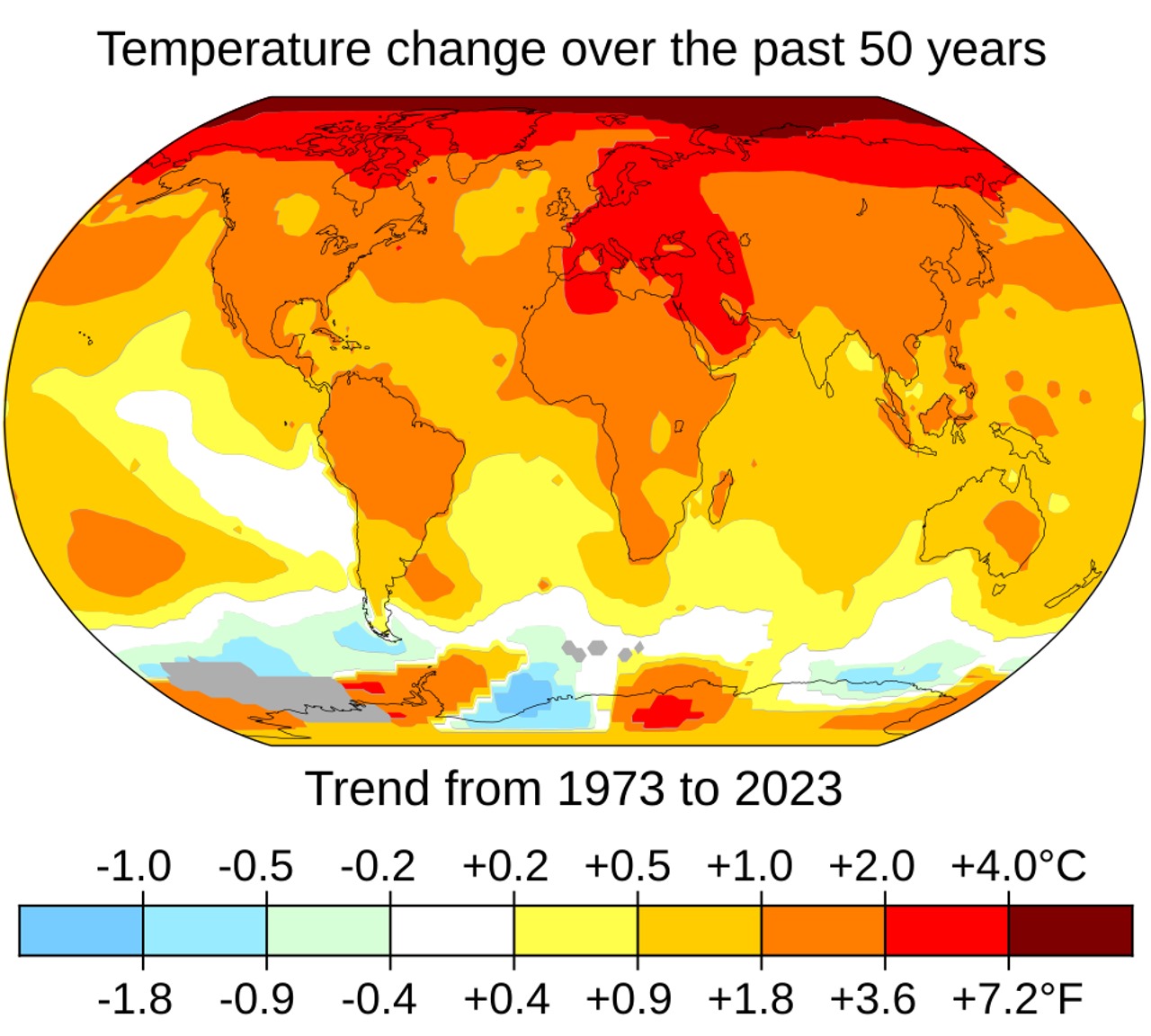
The Intergovernmental Panel on Climate Change had given the summit a sense of urgency with a report warning that global temperatures could rise by as much as 6 degrees Celsius within a century, double previous estimates. Such an increase would greatly heighten the risks of extreme weather events, ecological destruction, widespread disease outbreaks, and economic turmoil. The main disputes centered on Washington’s proposal to meet its emission targets through “carbon sinks,” such as reforestation projects that absorb carbon dioxide. Many scientists questioned the effectiveness of this strategy. Rather than making meaningful cuts, the US, backed by Australia, Canada, and Japan, pushed for an emissions-trading scheme and for reforestation projects abroad to count toward their emission targets. The US also demanded that existing forests and farmland be factored in.
No enforcement mechanism was established for countries that failed to meet their pledges, largely due to US pressure. The American oil industry and climate-change deniers in the US Senate claimed that reducing emissions would harm the economy. Developing nations, meanwhile, condemned the hypocrisy of the imperialist powers seeking to “buy the right to pollute” instead of taking real action.
Even among the imperialist nations, fierce infighting erupted. French President Jacques Chirac publicly attacked the US position, noting that America’s per capita emissions far exceeded those of the EU. Within the EU itself, tensions flared between the United Kingdom and France over how to negotiate with Washington. At one point, Britain’s Deputy Prime Minister John Prescott and French Environment Minister Dominique Voynet openly blamed each other for the failure to reach a deal.
As the summit neared its end, chair Jan Pronk proposed a last-minute compromise allowing limited use of carbon sinks by the US, excluding nuclear investments from credit trading, and offering financial aid to developing countries for clean technology. Both the US and EU rejected the plan. Further changes proposed by Germany and the Scandinavian countries led the EU to withdraw its support entirely, ultimately dooming the summit.
The breakdown of the 2000 climate summit underscored the inability of global capitalism to confront an existential crisis that requires rational planning of society and technology for human need, on a global scale, rather than private profit accumulation. For the capitalist leaders, national and economic interests prevailed over the collective good of humanity.