
|
Getting your Trinity Audio player ready...
|
Since 2002, Kenya has maintained a striking political trend no ruling party in its first term has ever returned to a general election under the same party ticket.
The country’s political landscape has been shaped by shifting alliances, collapsing coalitions and strategic party reinventions, a cycle that has repeated itself for more than two decades.
In 2002, Mwai Kibaki won the presidency through the National Rainbow Coalition (NARC), a broad alliance that brought together NAK and Raila Odinga’s LDP.
The coalition ended KANU’s decades long rule but fractured within five years.
The 2005 constitutional referendum split the government, with Kibaki leading the Yes campaign and Raila Odinga championing the No side.
The Orange victory energised Raila’s movement and led to the creation of ODM in 2007, only months before the election. Kibaki discarded NARC and ran under the newly created PNU, which retained power in a disputed election that sparked violence and left more than 1,000 people dead and many displaced.
The 2013 elections saw a fresh wave of political formations. Uhuru Kenyatta launched The National Alliance (TNA), while William Ruto formed the United Republican Party (URP).
Together, they built the Jubilee Coalition and won the election.
Raila Odinga contested under the CORD coalition alongside Kalonzo Musyoka and Moses Wetangula. By 2017, TNA and URP had been dissolved into the Jubilee Party, which again secured victory as the opposition regrouped under NASA.
In the run up to the 2022 elections, political divisions intensified.
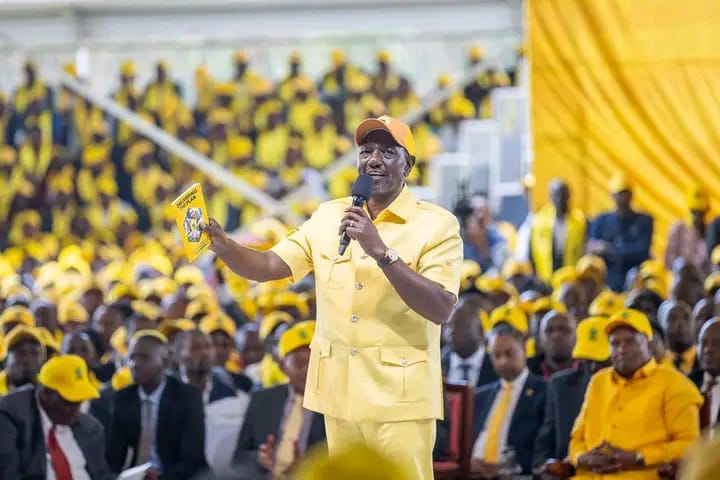
The Kieleweke faction aligned with President Uhuru Kenyatta and Raila Odinga, while the Tangatanga movement rallied behind William Ruto. Tangatanga eventually transformed into the United Democratic Alliance (UDA) less than a year before the election.
UDA won the presidency under the Kenya Kwanza Coalition, which included ANC under Musalia Mudavadi and Ford Kenya under Moses Wetangula.
The opposition assembled under the Azimio coalition comprising ODM, Wiper, KANU, NARC-Kenya and other parties.
As the nation edges toward the 2027 elections, the recurring question resurfaces will the ruling party return to the polls under the same banner? For 22 years, Kenya’s political history suggests otherwise.
Whether UDA remains intact, rebrands, merges or undergoes internal fractures is yet to be seen.
Speculation has grown further following statements by President William Ruto hinting that ODM might “form government or be part of government,” comments that gained renewed attention after the passing of Raila Odinga.
The durability of the Kenya Kwanza coalition is also under watch.
UDA, ANC and Ford-Kenya face familiar pressures that have historically destabilised ruling alliances, including internal rivalries, succession dynamics and regional political balancing.
From NARC to PNU, to TNA and URP, to Jubilee and now UDA, Kenya has never entered the next general election under the same ruling party it began with.
The country’s political ground has always shifted, and the road to 2028 appears poised to follow this long standing pattern of realignment and reinvention.