
|
Getting your Trinity Audio player ready...
|
The Ministry of Education has assured the public that all learners sitting for the inaugural Kenya Junior School Education Assessment (KJSEA) will complete their exams without disruption, following a few isolated cases of missing and misdirected papers reported earlier in the week.
Education Principal Secretary Dr. Julius Bitok said that the Kenya National Examination Council (KNEC) acted quickly to address the incidents and ensure that no candidate was disadvantaged. Speaking in Kajiado North after overseeing the opening of an exam container, Dr. Bitok noted that both the Kenya Primary School Education Assessment (KPSEA) and KJSEA were progressing well across the country.“We experienced a few minor logistical issues in some centres on the first day, but KNEC resolved them swiftly. The assessments are now running smoothly,” he said.
The PS also visited Ngong Township Comprehensive School to monitor the administration of the exams and later checked on preparations for the Kenya Certificate of Secondary Education (KCSE) at Enoomatasiani Girls High School. He affirmed that the government had deployed adequate personnel and security measures to safeguard the integrity of all examinations.“We have a multisectoral team working tirelessly to ensure professionalism and prevent malpractice. Everyone involved must stay alert and report any irregularities immediately,” he emphasized.
To strengthen transparency, the ministry has introduced digital innovations to monitor exam storage and distribution. Smart padlocks fitted on exam containers now send real-time data to the KNEC command centre whenever they are opened or closed. According to Dr. Bitok, this technology aims to enhance accountability and ensure that learners’ results accurately reflect their performance.
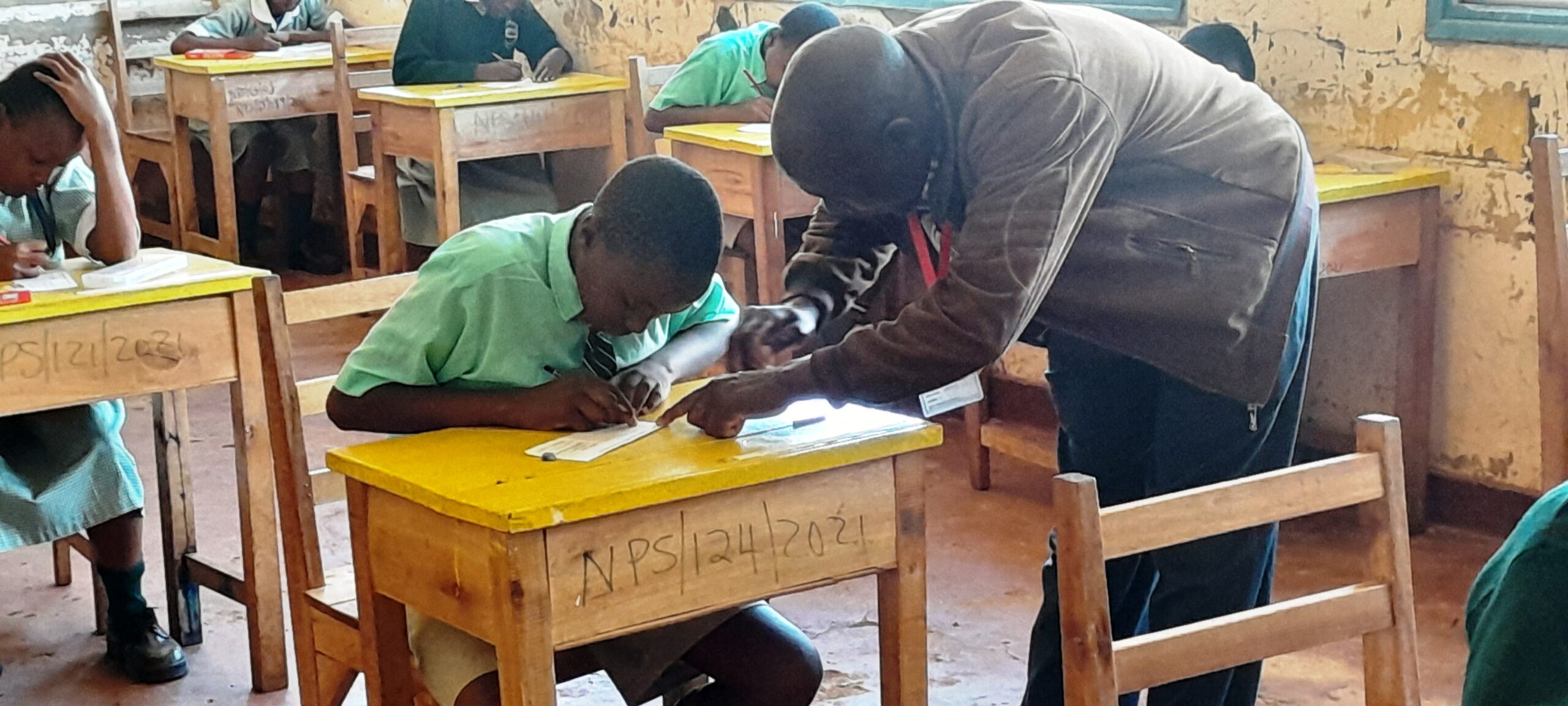
In Trans Nzoia County, a few schools such as Matisi Comprehensive and Kitale Education Centre experienced cases where registered candidates did not initially appear on official lists or had missing papers. County Director of Education Pamela Akello confirmed that KNEC authorized the affected learners to write their answers on extra sheets to ensure fairness. She stressed that these were isolated incidents that had been promptly resolved.
Across Kenya, more than 2.4 million Grade Six and Grade Nine students are taking their transition assessments, marking a major milestone in the implementation of the Competency-Based Curriculum (CBC). This year, over 3.4 million learners have been registered for various national assessments, including primary, junior, and senior levels.
Education Cabinet Secretary Julius Ogamba lauded the smooth progress of the assessments and the growing participation under the CBC framework. He highlighted that the introduction of digital monitoring tools represents a significant step toward promoting transparency and restoring confidence in national examinations.
While minor delays were reported in a few centres — such as Endikir School in Kajiado, where papers arrived late — education officials assured that all candidates would complete their exams. As the assessments continue, the ministry has called for calm and cooperation from parents, teachers, and administrators to ensure a credible and fair process for all learners.